 The Dark Side of the ‘Special Relationship’ between Israel and the US
by
Justin Raimondo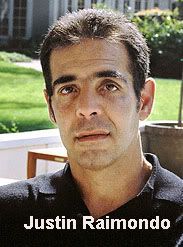 (Justin Raimondo is the author of An Enemy of the State: The Life of Murray N. Rothbard (Prometheus Books, 2000), Reclaiming the American Right: The Lost Legacy of the Conservative Movement (ISI, 2008), and Into the Bosnian Quagmire: The Case Against U.S. Intervention in the Balkans (1996).
He is a contributing editor for The American Conservative, a senior fellow at the Randolph Bourne Institute, and an adjunct scholar with the Ludwig von Mises Institute. He writes frequently for Chronicles:A Magazine of American Culture.)
Read
here for moreA silent battle has been raging right under our noses, a fierce underground struggle pitting the U.S. against one of its closest allies. For all its newsworthiness, the media has barely noticed the story – except when it surfaces,
briefly, like a giant fin jutting above the waves. The aggressor in this war is the state of Israel, with the U.S., its
sponsor and
protector, playing defense. This is the dark side of the "special relationship" – a battle of spy vs. spy.
Convicted spy
Jonathan Pollard – now serving a life sentence – stole secrets so vital that an attempt by the Israelis to get him pardoned was blocked by a massive protest from the intelligence and defense communities. Bill Clinton wanted to trade Pollard for Israeli concessions in the ongoing "peace process," and he was only prevented from doing so by a threat of mass resignations by the
top leadership of the intelligence community.
The reason for their intransigence: among the material Pollard had been asked by his Israeli handlers to steal was the U.S. attack plan against the Soviet Union. According to
Seymour Hersh, then-CIA director Bill Casey claimed Tel Aviv handed over the information to Moscow in exchange for relaxation of travel restrictions on Soviet Jews, who were then allowed to emigrate to Israel.
The Pollard case is emblematic – but it was just the beginning of a years-long effort by U.S. counterintelligence to rid themselves of the Israeli incubus. Law enforcement was – and presumably still is – convinced Pollard was very far from alone, and that a highly placed "mole" had provided him with key information. In his quest to procure very specific information, Pollard knew precisely which documents to look for – knowledge he couldn’t access without help from someone very high in government circles.
In addition, the National Security Agency (NSA) intercepted a phone conversation between an Israeli intelligence officer and his boss in Tel Aviv, during which they
discussed how to get hold of a letter by then-secretary of state Warren Christopher to Yasser Arafat. The Washington spy suggested they use "Mega," but his boss demurred: "
This is not something we use Mega for," he averred.
The search for Mega and his underlings continues to this day, as U.S. counterintelligence attempts to rip up what appears to be a vast Israeli spy operation by its very deep roots.That’s why they went after
Ben Ami Kadish, who handed over U.S. secrets to Tel Aviv and shared a
handler with Pollard, and why they indicted
Steve Rosen and Keith Weissman, two top officials of AIPAC, the powerful pro-Israel lobbying group.
That’s why they were
listening on the other end as Jane Harman
promised an
Israeli agent to
intervene in the Rosen-Weissman case.
And now a new front has been opened up in this subterranean war with the arrest of
Stewart David Nozette, a top U.S. scientist who worked for the Pentagon, had access to the most closely guarded nuclear secrets, and was the lead scientist in the search for water on the moon.
Nozette’s case is interesting because of his
impressive resume: he held top positions with the Department of Energy, the Department of Defense, and
NASA, and he served on the White House National Space Council under George H.W. Bush.
From 1989 until March 2006, he held "Q" clearance, which means he had access to "critical nuclear weapon design information" and vital information concerning 20 "special access programs" – secrets only a very few top government officials had knowledge of.
In other words, this wasn’t just some mid-level schmuck who wanted to sell out his country for cash: he was one of the big boys – the principal author of the
Clementine biostatic radar experiment, which allowed U.S. scientists to discover water on the moon – a kind of
J. Robert Oppenheimer figure, whose singular contributions to the U.S. space program and its military applications granted him security clearances available to a very select few.
The affidavit in support of the criminal
complaint [.pdf] alleging espionage is terse, vague in parts, and brimming with implication. Taking their cues from the Department of Justice
press release, most news reports state, "The complaint does not allege that the government of Israel or anyone acting on its behalf committed any offense under U.S. laws," leaving out the last three words in the DOJ’s sentence: "in this case."
In this particular case, it’s true, prosecutors are going after Nozette for violations that occurred while they were reeling him in, with a federal agent pretending to be a Mossad officer offering him money (not very much, by the way) in exchange for secrets. The real question, however, is what caused them to zero in on Nozette?
A
Washington Times piece cites Kenneth Piernick, a former senior FBI agent, who opined:
“He must have made some kind of attempt, which triggered the FBI’s interest in him. They cut in between him and whoever he was trying to work with and posed as an intelligence officer, agent, or courier to handle the issue, and then when he delivered what he intended to deliver to that person, his contact was likely an undercover FBI agent or [someone from] another U.S. intelligence service.”
Yet Nozette may have made more than a mere "attempt." The affidavit alleges that, from 1998 to 2008, he served as a consultant to "an aerospace company wholly owned by the government of Israel," during which time "approximately once a month representatives of the aerospace company proposed questions, or taskings, to Nozette." He answered these questions, and, in return, received regular payments totaling $250,000.
This indicates the Feds had been on to Nozette for quite some time, and with good cause. The affidavit also notes that, at the beginning of this year, he traveled to "a different foreign country" in possession of two computer "thumb" drives, which seemed to have mysteriously disappeared upon his return some three weeks later. What was on the drives – and who were the recipients?
In 2007, federal authorities raided the offices of Nozette’s nonprofit company, the Alliance for Competitive Technology (
ACT), purportedly because ACT, having procured several lucrative government contracts, had defrauded the federal government by overcharging.
The affidavit cites an anonymous colleague of Nozette who recalled the scientist said that if the U.S. government ever tried to put him in jail he would go to Israel or another foreign country and “tell them everything” he knows.
Perhaps the real reason for the raid, however, had to do with the FBI’s growing suspicion – if not certainty – he was funneling U.S. secrets to Tel Aviv. ACT is a curious creation, a "nonprofit" group that nevertheless generated over half a million dollars last year according to
documents filed with the IRS, with over $150,000 in salary and benefits paid out to Nozette. But it wasn’t just about money. ACT’s mission statement reads like a spy’s dream come true:
"The Alliance for Competitive Technology … has been created to serve the national and public interest by conducting scientific research and educational activities aimed at expanding the utilization of National and Government Laboratory resources.
The National Laboratories possess significant technology, technologists, and resources, of great potential value to growing U.S. industrial organizations, both small and large. Recent changes in national policy (the Stevenson-Wydler Act of 1986 and the NASA Technology Utilization Program) have sanctioned the pursuit of technology transfer from these organizations. However, the capabilities and resources present in National Laboratories are often difficult to access by small and medium sized organizations with limited resources.
ACT will research the best mechanisms to facilitate this transfer through focused research on technology transfer mechanisms, and educational and instructive programs on technology transfer from National Laboratories.
In addition, ACT will enable U.S. organizations to utilize the resources of National Laboratories through existing established mechanisms (e.g., the NASA Jet Propulsion Laboratory Technology Affiliates Program).Transfer of commercially valuable technology is significantly enhanced by such direct support of private sector efforts."
In short: ACT is all about technology transfer – from the U.S. to Israel. This, as is well-known, is one of the
favored activities of the Israeli intelligence services, which regularly pilfer the latest American technology (especially military applications) to such an extent that a General Accounting Office
investigation once characterized the effort as "the most aggressive espionage operations against the U.S. of any U.S. ally."
ACT had contracts with the U.S. Naval Research Laboratory in Washington, D.C., the Defense Advanced Research Projects Agency in Arlington, Va., and NASA’s Goddard Space Flight Center in Greenbelt, Md. It is hardly a leap of faith to conclude that vital data flowing from these projects was fed directly into the waiting maw of the Mossad.
Nozette was a key figure in developing and promoting the "Star Wars" ballistic missile defense system. His colleague in the "High Frontier" movement – and the official director of ACT – is one
Klaus Heiss, like Nozette an
enthusiast [.pdf] of space colonization (who also has some strong views on
other subjects).
Contacted by an FBI agent masquerading as an Israeli intelligence agent, Nozette didn’t blink when told his lunch companion was from the Mossad: "Good," he said. "Happy to be of assistance." This was well before the issue of money was raised.
Later in the conversation, Nozette boasted of his top-level security clearances and the range and depth of his knowledge of U.S. secrets, adding,
"I don’t get recruited by the Mossad every day. By the way, I knew this day would come." Questioned further by the undercover agent, Nozette said,
"I thought I was working for you already. I mean, that’s what I always thought [the foreign company] was – just a front."Which it no doubt was.
Nozette agreed to be a regular "asset," yet he clearly felt his position was increasingly precarious. He inquired about the right of return and raised the possibility that he might go to Israel. He wanted a passport as part of his payment, in addition to the few thousand dollars the FBI was putting in a post office "dead drop" for him on receipt of stolen secrets.
Well, then, so what? Don’t all nations, even allies, spy on each other? What’s the significance of this particular case
On the surface, our relationship with Israel is encompassed by the terms of the "special relationship," which has so far consisted of the U.S. giving
unconditional support to Tel Aviv’s every action, no matter how
brutal [.pdf] or
contrary to our interests – and tolerating, to a large degree, its
extensive covert operations on U.S. soil (or, at least, keeping quiet about them). On a deeper level, however, the tensions in this one-way love affair have frayed the specialness of the relationship almost to the breaking point.
This is not just due to the election of Barack Obama, who is
widely perceived in Israel as being biased against the Jewish state. These tensions arose during Bush’s second term, when U.S. policy began to perceptibly tilt away from Tel Aviv.
A particularly telling blow to U.S.-Israeli relations was the decision by the U.S. to
clamp down on visa requirements for Israelis entering the U.S.: potential visitors from Israel are now required to undergo an interview, restrictions on their length of stay have been extended, and admission to the U.S. is no longer assured.
In the secret world of spooks spying on one another, the U.S.-Israeli relationship is increasingly adversarial, while in the diplomatic-political realm, it has
nearly reached the point of open hostilities.
This is thanks to the objective conditions that determine relations among nations: in the post-Cold War world, Israel necessarily became
much less of an asset to the U.S. In the post-9/11 world, as John Mearsheimer and Stephen Walt have so trenchantly
pointed out, it is an outright liability.
Our self-sacrificial policy of unconditional support for Israel has earned us
implacable enemies in the Arab world and granted our adversaries a priceless propaganda prize – and the growing awareness of this disability is something the Israelis no doubt find disturbing. The distortion of our foreign policy by the power of the Israel lobby is also being
widely noted, and this is their real Achilles heel.
In this case, too, the Lobby will no doubt rush to exert their influence to downgrade Nozette’s crime and even depict him as an innocent victim of entrapment. Defenders of the AIPAC duo conjured a vast "anti-Semitic"
conspiracy within the U.S. Justice Department and the FBI to explain the alleged persecution of Rosen and Weissman, and the same tactics are bound to be trotted out in this instance.
That is nonsense. The FBI didn’t just pick Nozette arbitrarily and conjure his crimes out of thin air. Their target was already deeply involved with the Israelis, and this is what brought him to their attention in the first place.
The nature and extent of Israeli spying in the U.S. is not a subject you’ll see the "mainstream" media very often touch with so much as a 10-foot pole, but when it does the results can be ominously disturbing. I, for one, haven’t forgotten Carl Cameron’s
four-part series on Israeli spying in the U.S., broadcast by Fox News in December 2001.
According to Cameron, his sources in law enforcement told him the Israelis had been following the 9/11 hijackers and had foreknowledge of their plans but somehow neglected to tell us. And then there were those dancing Israelis, leaping for joy at the sight of the Twin Towers burning…This is the dark side of the "special relationship," so dark that hardly anyone wants to acknowledge it, let alone consider its implications.
- Justin Raimondo